How to choose the right Reiki course for you
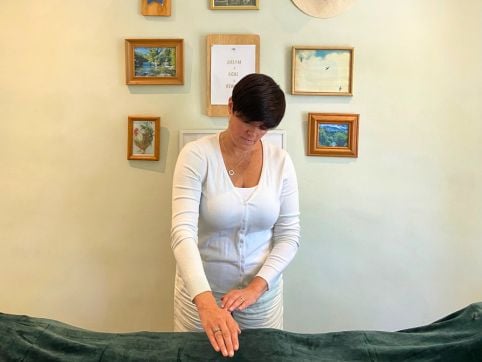
Written by Amy Orsini, Reiki Master Teacher, Sound Practitioner & Life Coach at Three Little Birds, Purley, London.
So, you’re thinking about learning Reiki?
First of all, how lovely.
Whether you’re curious because you’ve received Reiki before, because you can feel something shifting in your own energy, or because you’re simply drawn to it without fully knowing why yet, learning Reiki can be a beautiful step.
It can also feel a little confusing at first.
There are so many Reiki courses out there.
Some are online, some are in person. Some are half a day, some are two days, some are longer. Some are taught in big groups, some in very small groups. Some teachers focus heavily on tradition, some bring in personal development, coaching, intuition or other healing practices too.
So how do you know which course is right for you?
The honest answer is this: you need both practical information and intuition.
Very 'Three Little Birds,' really. Feet on the ground, heart open, intuition switched on.
Let’s talk through what I’d look for.
Start with the teacher
Reiki is personal.
Yes, you’re learning a technique. Yes, there will be theory, hand positions, principles, history and practice - but Reiki is also energetic, intuitive and deeply experiential. The person teaching you matters.
Before you book, spend a little time getting a feel for the teacher.
Read their website. Look at their social media. Watch a video of them speaking if they have one. Read their blogs. Listen to their podcast if they have one. See whether their words make sense to you. Notice whether you feel safe, curious, calm or interested when you read what they’ve written.
You don’t need to overthink it, but do pay attention.
Do they explain things in a way that feels clear?
Do they sound like someone you could ask questions to?
Do you feel comfortable with their tone and approach?
Do you feel drawn to learn from them?
This is not about whether someone is “good” or “bad”. It’s about resonance. We all learn better from people we feel comfortable with.
Think back to school. You probably had teachers you learned brilliantly from, and others where your brain quietly packed a bag and left the building. It doesn’t always mean the teacher was wrong. Sometimes the connection just wasn’t there.
With Reiki, that connection is important.
Check reviews and feedback
Reviews are a really helpful place to start.
Read what past students have said. Are they talking about feeling supported? Did they feel confident after the course? Did they mention the teacher being clear, kind, knowledgeable or approachable?
Reviews give you a window into the student experience, not just the marketing.
Of course, no review section will tell you everything, but it can help you understand whether people felt safe and held during the training, and with something as personal as Reiki, that really matters.
Think about the style of Reiki
There are different styles of Reiki.
At Three Little Birds, I teach Usui Reiki, which traces back to Mikao Usui, the founder of Reiki. If you’ve received Reiki before and loved it, you might want to ask the practitioner what kind of Reiki they practise and who taught them.
That doesn’t mean you have to learn exactly the same style, but it can give you a useful starting point.
It’s also worth checking whether the course covers Eastern Reiki, Western Reiki, or both (my courses cover both). Some courses will focus more on one approach than the other. There’s no need to get lost in all the details before you’ve even started, but if something matters to you - ask!
A good teacher won’t mind you asking questions.
Look for in-person attunements
This is a big one.
If you’re learning Reiki, especially if you think you may want to practise professionally in the future, in-person attunements are important.
An attunement is part of the Reiki training process where the teacher connects the student to Reiki energy. There are online Reiki courses available, and online learning can be brilliant for many things, but Reiki training is one area where it’s worth thinking ahead.
If you later want to get insurance, register with a Reiki association, or work with the public, you may be asked whether your attunements were completed in person.
Even if you’re only learning Reiki for yourself right now, you don’t always know where Reiki will take you. I didn’t sign up to my first Reiki course because I planned to become a practitioner. I was simply curious about energy, and now... here we are!
So give your future self options.
Make sure there is hands-on practice
Reiki is not something you only learn by reading about it.
Theory matters, of course. You want to understand what Reiki is, where it comes from, how to use it, what the principles are, and how to practise safely and respectfully.
But experience is your biggest teacher.
A good Reiki course should give you time to practise. You want to feel what it’s like to offer Reiki, to receive Reiki, to use hand positions, to notice what you sense, and to ask questions as you go.
This is how confidence grows - not from being handed a manual and sent on your way, but from trying it, feeling it, asking, adjusting, practising and realising, “Oh, I can do this.”
That moment matters.
Ask what is included
Before you book, check what you actually receive as part of the course.
For Reiki Level 1, you would usually expect to learn about Reiki history, the Reiki principles, self-treatment, offering Reiki to friends and family, energy awareness and practical techniques.
It’s also worth checking whether the course includes:
- A comprehensive manual
- A certificate
- A clear Reiki lineage
- In-person attunements
- Hands-on practice
- Post-course support
- Opportunities to keep practising
- Access to Reiki shares or community support
A manual is especially helpful because you won’t remember everything from the course. Nobody does. You want something you can come back to afterwards when you’re practising at home and wondering, “Wait, what was that bit again?”
A certificate matters if you want proof of training later.
A Reiki lineage matters because it shows the line of teachers going back to Mikao Usui. Think of it like your Reiki family tree.
Consider the class size
Class size can really change the feel of a Reiki course.
Some people love bigger groups. They enjoy the energy, the conversation and meeting lots of people. Others feel more comfortable in a smaller setting where there is more space to ask questions and receive individual support.
Neither is wrong, but it’s worth knowing what you prefer.
At Three Little Birds, Reiki courses are intentionally kept very small, with a maximum of four students. This allows for personal attention, tailored feedback and a calm, spacious learning environment. That might be exactly what you need if you want to feel safe, unrushed and supported.
If class size isn’t listed on the course page, ask.
A simple “How many people are usually in the group?” is perfectly reasonable.
Look at the length of the training
Reiki courses can vary a lot in length.
Some are half a day. Some are one day. Some are two days or more. A shorter course might feel appealing if you’re busy, but think about what you need to feel confident afterwards.
Will there be enough time to cover the theory?
Will there be enough time to practise?
Will there be enough time to ask questions?
Will you feel rushed?
Reiki is simple, but that doesn’t mean your learning experience should feel thin.
Sometimes spaciousness is part of the teaching.
Don’t choose on price alone
Of course, price matters.
We all have budgets. We all have to make sensible decisions, but when you’re comparing Reiki courses, try not to assume that the most expensive course is automatically the best, or that the cheapest course is the best value.
Look at the whole picture.
What’s included?
How many students are in the group?
How much practice time will you get?
Is there ongoing support?
Will you receive a manual, certificate and lineage?
Do you feel good about the teacher?
Value is not just about the price. It’s about the experience, the support and how confident you feel afterwards.
Notice whether there is support after the course
Your Reiki journey doesn’t end when the course finishes.
In many ways, that’s where it begins.
Once you go home and start practising Reiki on yourself, your friends, your family or your pets, questions may come up. You may want reassurance. You may want to keep building confidence. You may want to practise with others.
That’s why post-course support matters.
Reiki shares can be especially lovely because they give you the chance to give and receive Reiki in a supportive space, meet other practitioners and keep your practice alive.
While you don’t “lose” Reiki if you stop practising (you can't, it's with you for life), you can lose the habit - and what a shame to learn something so supportive and then forget to use it.
Trust your intuition
After all the practical checks, come back to your gut.
Reiki is energy. Choosing a Reiki course is not just a spreadsheet decision. It’s also a felt sense.
Do you feel safe?
Do you feel curious?
Do you feel drawn to the teacher?
Do you understand what they’re saying?
Does the course feel clear and supportive?
Can you imagine yourself learning there?
If something feels off, listen.
If something feels right, listen to that too.
Your intuition is already part of the journey.
A simple checklist before booking a Reiki course
Before you book, ask:
- Do I resonate with the teacher?
- Have I read reviews or student feedback?
- Is the Reiki style clear?
- Are attunements in person?
- Is there hands-on practice?
- What is included in the course?
- Will I receive a manual, certificate and lineage?
- How many people will be in the group?
- How long is the training?
- Is there support afterwards?
- Does it feel right?
Final thoughts
Choosing a Reiki course is not about finding the flashiest option, the cheapest option or the one that appears first on Google.
It’s about finding the course that feels right for you.
The one where you feel safe. The one where the teacher explains things in a way you understand. The one where you have space to practise, ask questions and build confidence. The one that supports not just the version of you booking the course, but the future version of you who may want to keep going.
Reiki can take you down the most unexpected and wonderful paths.
So take your time. Ask questions. Read the reviews. Trust your gut.
If you feel called to learn, maybe that call is worth listening to.
If you’re local and you’d like to learn Reiki with me, you can explore my Reiki training options.
If you have questions before booking, email me!
I’m always happy to help you work out whether it’s the right next step for you.
Have a wonderful day, my friend,
Amy
💜🤟
If you liked this post, you may also enjoy:
- The 12 Laws of the Universe
- 10 practical tips for mid-year goal setting
- 'If you don't quit, you win'
- Self perception
- A Leap of Faith
Take me back to all blog posts